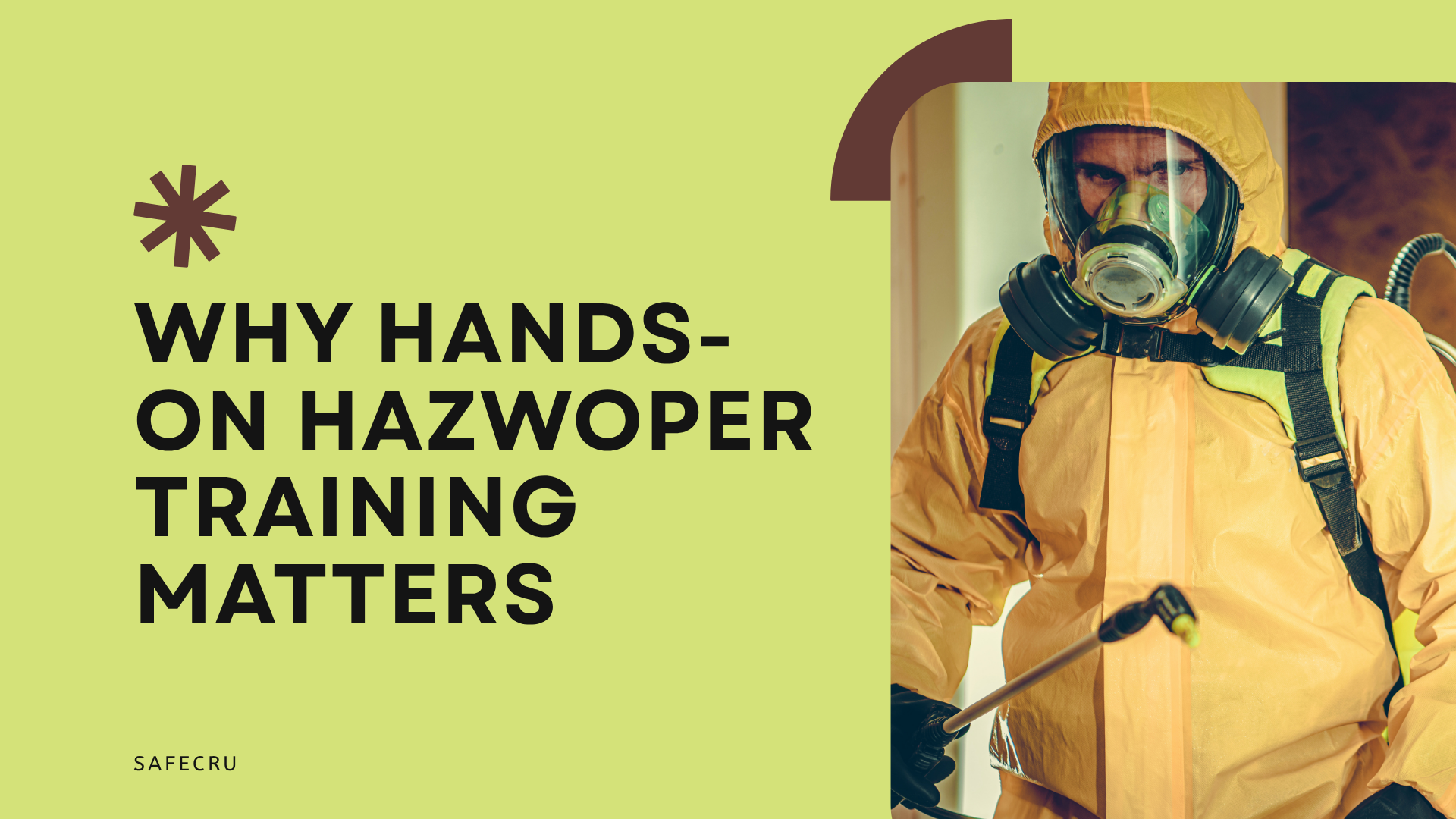
Some HAZWOPER courses are built entirely around videos and quizzes. Others include real, physical practice with the equipment and procedures workers actually use on site. The difference matters more than it might seem — here's why.
Jump To:
What "Hands-On" Actually Means in HAZWOPER Training
Hands-on HAZWOPER training means physically practicing the skills the course covers, not just watching or reading about them:
- Putting on and taking off PPE correctly, under time pressure
- Using air monitoring equipment
- Running through decontamination procedures
- Practicing emergency response steps for a simulated spill or exposure incident
These are physical skills. Reading about how to doff a contaminated suit without spreading contamination is different from actually doing it — the second time you try it always goes better than the first, and you don't want your "first time" to be during an actual incident.
Why This Matters More for HAZWOPER Than Other OSHA Courses
General safety awareness courses like OSHA 10 or OSHA 30 are primarily about knowledge — understanding hazards, recognizing risks, knowing procedures. That kind of content transfers reasonably well through video and reading.
HAZWOPER is different. The standard, 29 CFR 1910.120, exists specifically for high risk hazardous waste operations, where the gap between "knowing what to do" and "being able to actually do it correctly" can be the difference between a safe outcome and a serious injury.
What Gets Lost Without Hands-On Practice
- Muscle memory. Under stress, workers default to what they've physically practiced, not what they read once.
- Confidence with equipment. The first time using a respirator or air monitor shouldn't be during a real hazard.
- Realistic pacing. Decontamination procedures have a correct order and timing that's difficult to internalize without actually performing them.
- Instructor feedback. A live instructor can catch and correct mistakes in real time; a video can't.
What SafeCru's Hands-On Training Includes
SafeCru's HAZWOPER 40 course combines classroom instruction with hands-on exercises — real practice with PPE, equipment, and procedures, not just recorded demonstrations. Students get the chance to become genuinely familiar and comfortable with the equipment and procedures they'll use on the job, with an instructor present to guide and correct as they go.
- 5 days (40 hours)
- $600
- Taught bilingually in English and Spanish
- Based in Indianapolis, with on site training available for larger employer groups
- Scheduled by request, including weekends
For the full course breakdown, see SafeCru's Complete Guide to OSHA HAZWOPER 40 Training.
Questions to Ask Any HAZWOPER Provider
If you're comparing providers, ask directly:
- Is the hands on component in person, or only a video demonstration?
- Will I practice with real PPE and equipment, or only watch someone else use it?
- Is an instructor present during hands on practice to give feedback?
If a provider can't give clear answers, that's worth treating as a red flag.
Frequently Asked Questions
Is hands-on training required for HAZWOPER certification?
The intent of 29 CFR 1910.120 is to produce workers who can safely perform hazardous waste operations — which requires more than classroom knowledge. Providers vary in how seriously they take the hands-on component, so it’s worth confirming directly.
Can hands-on training be done virtually?
Not meaningfully. Physical skills like PPE donning/doffing and decontamination procedures require real practice with real equipment — a video can demonstrate the steps, but it can’t correct your form or build the muscle memory the training is meant to produce.